Testing & Evaluation
Testing is a requirement in many states. We make it easy to comply with testing requirements by gathering information and resources for testing services all in one place.
The College Board
The College Board is a not-for-profit membership association whose mission is to connect students to college success and opportunity. Founded in 1900, the association is composed of more than 4,700 schools, colleges, universities, and other educational organizations. Each year, the College Board serves over three and a half million students and their parents, 23,000 high schools, and 3,500 colleges through major programs and services in college admissions, guidance, assessment, financial aid, enrollment, and teaching and learning. Among its best-known programs are the SAT, the PSAT/NMSQT®, and the Advanced Placement Program®(AP).
Triangle Education Assessments
Triangle Education Assessments offers the Iowa Tests and Woodcock-Johnson III Tests of Achievement.
What does the SAT measure? Aptitude? Achievement? Anything?
When the first SAT was created, it was named the Scholastic Aptitude Test, signaling that its creators and the education world believed it to be a test of aptitude, or, a student’s ability to perform well in college. Aptitude tests supposedly measure talents that indicate possible achievement in the future, while achievement tests supposedly reveal how much someone has learned in the past. All these years later, we know the test never really did measure anybody’s aptitude to do well in college.
Family Learning Organization Testing Services
Family Learning Organization offers standardized tests for homeschooling families. Through their Educational Assessment & Testing Service, tests may be obtained by parents to administer to their homeschooled children. Their services include standardized achievement tests (California Achievement Test, Fifth Edition), review of parent-administered assessments by a certified teacher, toll-free telephone answers to your questions about administering tests and interpreting results, and computerized score printouts for tests including Percentile Rankings, Grade Equivalencies, Stanine Scores and Scaled Scores, where applicable.
FairTest (The National Center for Fair & Open Testing)
The National Center for Fair & Open Testing (FairTest) works to end the misuses and flaws of standardized testing and to ensure that evaluation of students, teachers and schools is fair, open, valid and educationally beneficial. They place special emphasis on eliminating the racial, class, gender, and cultural barriers to equal opportunity posed by standardized tests, and preventing their damage to the quality of education. Based on Goals and Principles, they provide information, technical assistance and advocacy on a broad range of testing concerns, focusing on three areas: K-12, university admissions, and employment tests. FairTest publishes a quarterly newsletter, The Examiner, plus a full catalog of materials on both K- 12 and university testing to aid teachers, administrators, students, parents and researchers. They also have numerous fact sheets available on standardized testing and alternative assessment.
National Merit Scholarship Corporation
Established in 1955, National Merit Scholarship Corporation (NMSC) is an independent, not-for-profit organization that operates without government assistance. NMSC conducts the National Merit® Scholarship Program, an annual academic competition for recognition and college undergraduate scholarships.
The Princeton Review
The Princeton Review offers personalized private tutoring, test prep, and admission products and services to help students knock down barriers and achieve their academic goals. Search for schools and careers, find test preparation courses, get information on scholarships, and more. Covered tests include: ACT, AP, PSAT, SAT, SAT Subjects, TOEFL, ISEE, MCAT, DAT, OAT, LSAT, GRE, GMAT, CFA, and USMLE.
The Evils Of Mandatory Testing
As home schooling grows as a movement, there is increasing politics from anti-home school forces to try to interfere with or legislatively control home schoolers. This has come to include legislative attempts to force home school students to take standardized tests along with public school students. But mandatory testing doesn't work in public schools, and it won't work for home schoolers.
eXL Learning Homeschool Hangout
This resource center offers homeschool assessments, speakers and events related to homeschooling topics, classes and tutoring, portfolio development and college preparation, and additional diagnostic assessments.
Piedmont Education Services
Piedmont Education Services offers the Iowa Tests of Basic Skills (ITBS) and the Woodcock-Johnson III Tests of Achievement (WJ-III), along with test prep materials.
Educational Testing Services (ETS)
Educational Testing Services (ETS) is an organization that provides a range of products and services, including research, test administration, test scoring, and more. This organization develops and administers AP, GRE, and SAT tests, among others.
Christian Liberty
To help you in the critical task of selecting appropriate materials for your child, Christian Liberty Press has developed several specialized services for homeschoolers. They can test your child and also provide a customized curriculum recommendation that is suited for your child’s skill level.
Future School
Future School online learning systems support your entire family in both the classroom and the home using only qualified teachers to ensure its educational services. They offer tutoring students in the home, classroom and after school facilities, providing both face-to-face, telephone and online assistance in the two core areas of literacy and numeracy. Future School has also many years experience in the development of Basic Skill Tests in mathematics and English covering years 3, 5, and 7, including the materials, delivery, marking, psychometrics and reporting to Education Departments, schools, and parents.
Testing and Assessment: What Do the Tests Tell Us?
Many parents arrive in the world of gifted education with a report full of tests results, supposedly defining their child as "gifted." But more often than not, parents have more questions than answers upon receiving those test results. And just as often, the short answers from the psychologist, the school, the teachers, and other parents do more to confuse than clarify.
New Mexico Home School Achievement Test Guidelines
I. Each School District is Responsible for the Following:
A. MUST arrange a place and time for testing home school students. The location may be outside the school building. The time must be within the state testing timeframe. Notification of the time and place must be provided to all home school operators by January 30.
B. MUST allow trained home school operators to be test administrators for home school students. When a home school operator(s) is unavailable or not interested, trained school personnel will administer the test. Home school operators other than the test administrator may be present to serve as proctors provided their presence does not disrupt the testing environment. Local school districts will provide training to home school operators on administering the test. The administration of the test to home school students must be monitored at the testing site by paid school employees during their regular working hours. (No more than 30 students should be grouped together for testing with one test administrator and one or two proctors.)
II. Each Home School Operator is Responsible for the Following:
A. Meeting the requirement of public school code: "Test students annually…as determined by the State Superintendent." (S-22-1-2.1)
B. Notifying the appropriate school staff if the student is unable to attend the scheduled testing.
C. Arranging with the school district an appropriate time and place for makeup testing.
III. General Guidelines:
A. All home school children in grades 4, 6, and 8 are required to participate in the state mandated New Mexico Achievement Assessment Program. This assessment is the only norm-referenced achievement test administered statewide to public school students which provides comparability information using national norms. No other statewide testing is required for home school student (The home school students will participate in the norm-referenced CTBS 5/TERRANOVA SURVEY PLUS only, and may opt to take all subjects or just the Reading/language and Mathematics tests within the battery).
B. If a school district assesses a fee, it is recommended that the fee not exceed the contractor's per student cost. Any additional costs associated with a special administration should be reasonable and justifiable.
C. Individual student score reports should be provided to the home school operator for each home school student who is tested.
D. Test answer sheets of home school students in grades 4,6, and 8 taking the required tests will be scored by the test contractor designated by the State Department of Education.
E. Home school students enrolled in grades 4, 6, and 8 who do not test and who are not exempt will be reported to the State Department of Education by the end of the school year. The Department will notify the local school district that the home school operator is in violation of the Statute 22-1-2.1 and the Compulsory School Attendance Law (S-22-12-1). In this event, school district policy should be followed as in the case of any other student who is in violation of this statute.
IV. Optional Testing Procedures
A. Home school operators with student enrolled in grades 4, 6, or 8 may elect to use the Bob Jones University Press (BJUP) testing service instead of testing their students through the New Mexico public schools. BJUP does not offer the CTBS tests. Therefore, the home school operator should request the Iowa Test of Basic Skills, Form L. It is the home school operator's responsibility to make these arrangements and to pay for this service. (By calling 1-800-845-5731 and asking for Customer Service, you may obtain detailed information.)
B. If using the BJUP testing service, it is the responsibility of the home school operator to notify the local school district testing office no later than January 15. This will help staff plan and budget for the year.
A. MUST arrange a place and time for testing home school students. The location may be outside the school building. The time must be within the state testing timeframe. Notification of the time and place must be provided to all home school operators by January 30.
B. MUST allow trained home school operators to be test administrators for home school students. When a home school operator(s) is unavailable or not interested, trained school personnel will administer the test. Home school operators other than the test administrator may be present to serve as proctors provided their presence does not disrupt the testing environment. Local school districts will provide training to home school operators on administering the test. The administration of the test to home school students must be monitored at the testing site by paid school employees during their regular working hours. (No more than 30 students should be grouped together for testing with one test administrator and one or two proctors.)
II. Each Home School Operator is Responsible for the Following:
A. Meeting the requirement of public school code: "Test students annually…as determined by the State Superintendent." (S-22-1-2.1)
B. Notifying the appropriate school staff if the student is unable to attend the scheduled testing.
C. Arranging with the school district an appropriate time and place for makeup testing.
III. General Guidelines:
A. All home school children in grades 4, 6, and 8 are required to participate in the state mandated New Mexico Achievement Assessment Program. This assessment is the only norm-referenced achievement test administered statewide to public school students which provides comparability information using national norms. No other statewide testing is required for home school student (The home school students will participate in the norm-referenced CTBS 5/TERRANOVA SURVEY PLUS only, and may opt to take all subjects or just the Reading/language and Mathematics tests within the battery).
B. If a school district assesses a fee, it is recommended that the fee not exceed the contractor's per student cost. Any additional costs associated with a special administration should be reasonable and justifiable.
C. Individual student score reports should be provided to the home school operator for each home school student who is tested.
D. Test answer sheets of home school students in grades 4,6, and 8 taking the required tests will be scored by the test contractor designated by the State Department of Education.
E. Home school students enrolled in grades 4, 6, and 8 who do not test and who are not exempt will be reported to the State Department of Education by the end of the school year. The Department will notify the local school district that the home school operator is in violation of the Statute 22-1-2.1 and the Compulsory School Attendance Law (S-22-12-1). In this event, school district policy should be followed as in the case of any other student who is in violation of this statute.
IV. Optional Testing Procedures
A. Home school operators with student enrolled in grades 4, 6, or 8 may elect to use the Bob Jones University Press (BJUP) testing service instead of testing their students through the New Mexico public schools. BJUP does not offer the CTBS tests. Therefore, the home school operator should request the Iowa Test of Basic Skills, Form L. It is the home school operator's responsibility to make these arrangements and to pay for this service. (By calling 1-800-845-5731 and asking for Customer Service, you may obtain detailed information.)
B. If using the BJUP testing service, it is the responsibility of the home school operator to notify the local school district testing office no later than January 15. This will help staff plan and budget for the year.
Seton Testing Services
Seton provides affordable, nationally standardized testing, including ability and achievement tests, practice tests, and test prep materials for homeschoolers, private schools, and home school groups. Testing services and materials are available for grades K-12. Tests include the Stanford 10 Online, CAT E-Survey, IOWA Form E, and TerraNova 2/CAT 6. Ordering is easy and you will get test results returned within two weeks.
PLATO Learning, Inc./eduTest Assessment
PLATO Learning, Inc. delivers just-in-time online assessments that are tied directly to state and provincial standards. Their courseware includes thousands of hours of basic to advanced level instructional content for K-adult learners. They provide web based assessments that assist in placement, progress monitoring, and accountability requirements with diagnostic and prescriptive tests, simulated high-stakes tests, lesson progress tests, standards-based tests, and cumulative tests.
Christian Cottage Schools
This private school offers services to homeschoolers including assessment, custom curriculum development, mentorship, and support, and involvement and protection. We offer a full service home schooling solution for your family regardless of the educational challenges or questions you may have so you can be successful having school at home. They specialize in special needs curriculum.
Resources
-
 100 Timed Tests for Addition and Subtraction: Math Book for Kids Ages 4 to 7 | P...
 -
 Scholastic Success with Math Tests Grade 3 Workbook
 -
 Carson Dellosa Spectrum 4th Grade Test Practice Workbook All Subjects, Ages 9 to...
 -
 Humble Math - 100 Days of Timed Tests: Multiplication: Grades 3-5, Math Drills, ...
 -
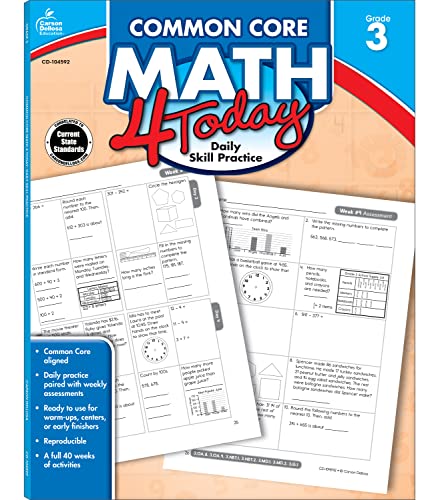
Carson Dellosa Common Core Math 4 Today 3rd Grade Workbooks, Telling Time, Fract...
-
Scholastic Success with Reading Tests Grade 3 Workbook
-
Evan-Moor Skill Sharpeners Spell and Write Workbook, Grade 3, 120 Spelling Words...
-
Evan-Moor Skill Sharpeners Spell and Write Workbook, Grade 5, 144 Spelling Words...




Featured Resources
-
 High School Testing: Knowledge That Saves Money (The HomeScholar's Coffee B...
 -
Humble Math - 100 Days of Timed Tests: Addition and Subtraction: Grades K-2, Mat...
-
 Becoming Homeschoolers: Give Your Kids a Great Education, a Strong Family, and a...
 -
Carson Dellosa Spectrum 4th Grade Test Practice Workbook All Subjects, Ages 9 to...
-
100 Timed Tests for Addition and Subtraction: Math Book for Kids Ages 4 to 7 | P...
-
Spectrum 7th Grade Test Practice Workbooks All Subjects, Ages 12 to 13, Grade 7 ...


